Representative Case Study
Live Network Infrastructure Migration & Rack Remediation
A structured remediation and migration project involving legacy cabling cleanup, controlled equipment replacement, rack reorganization, structured repatching, and post-migration validation within an existing network environment.
Network InfrastructureMigration & Upgrade
Overview
Project Overview
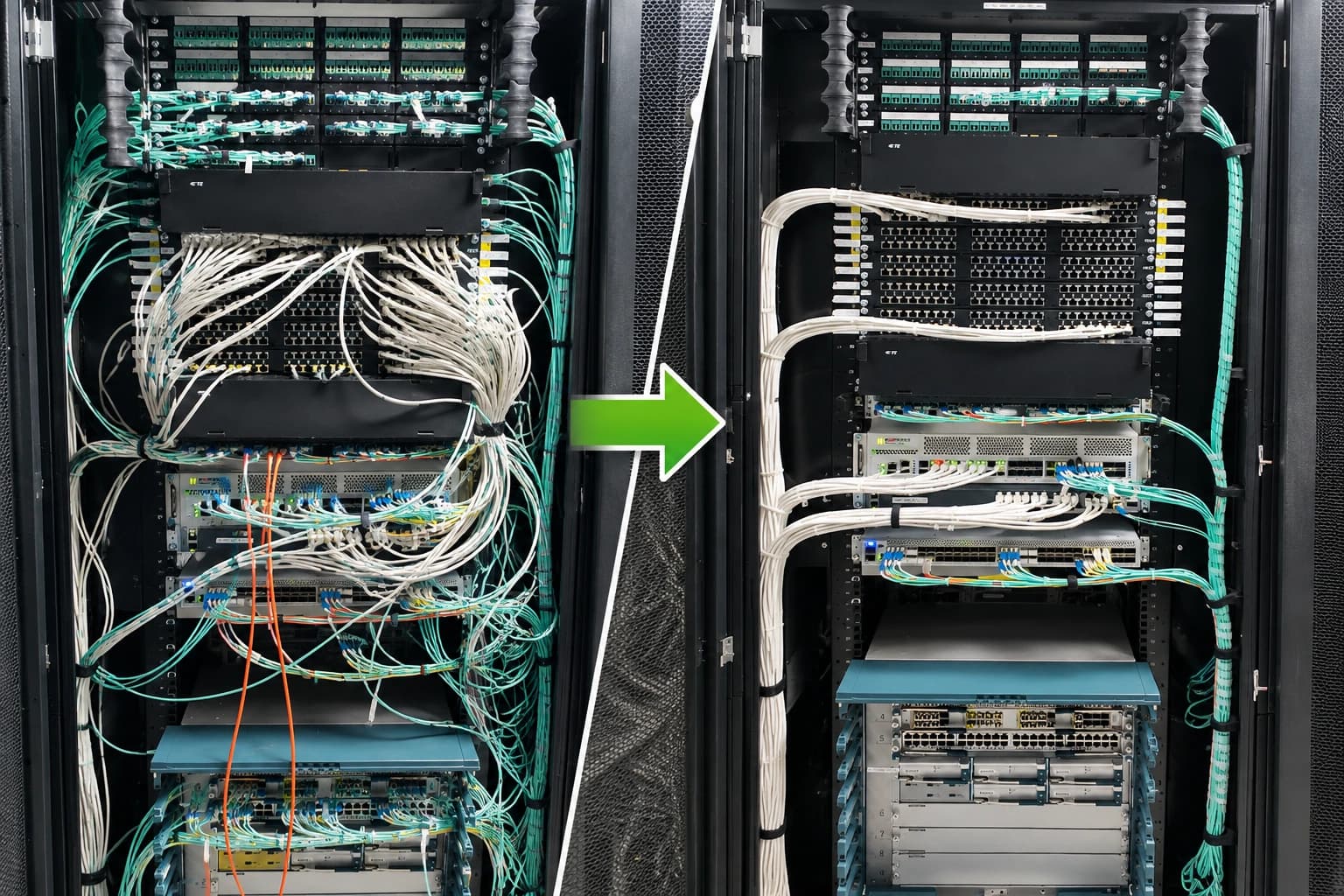
The existing network racks had accumulated a large volume of copper and fiber patching around active infrastructure. The migration required more than simply replacing legacy equipment. Existing connections first had to be understood, unnecessary patching identified, active services protected, and the rack environment reorganized so that new equipment could be installed and repatched in a controlled manner.
The Challenge
Migrating Within an Existing Live Environment
Dense patching, mixed copper and fiber connectivity, limited working space, and dependencies on existing equipment made the migration sensitive. Removing cables without verification could affect active services, while installing new equipment without first improving the rack condition would carry existing cabling problems into the new infrastructure.
Assessment
Understanding Existing Connectivity
Before equipment replacement, the existing rack layout and connectivity were reviewed. Copper and fiber patching was traced, device connections were identified, cable paths were assessed, and the migration sequence was planned around the existing environment. This provided a controlled baseline before physical changes began.
Rack Remediation
Removing Legacy Patching and Reorganizing Cabling
Unnecessary and obsolete patching was removed only after verification. Remaining copper and fiber connections were reorganized around the rack cable-management paths. Excess cable loops and congested areas were reduced where practical, creating clearer access to patch panels, network equipment, and rack space required for the migration.
Migration
Controlled Legacy Equipment Replacement
Once the required connectivity and migration sequence were confirmed, legacy network equipment was removed in a controlled manner. Replacement equipment was installed into the prepared rack positions while maintaining the planned port and connectivity relationships required for service restoration.
Repatching
Structured Copper and Fiber Reconnection
Required copper and fiber connections were repatched to the replacement infrastructure using a more organized routing approach. Connections were routed through available cable-management paths with attention to accessibility, separation, bend management, labeling, and future maintenance requirements.
Validation
Post-Migration Verification
After repatching, physical connectivity and installed equipment were reviewed against the migration requirements. Port connections, cable routing, device status, and rack condition were checked before the work was considered ready for operational handover.
Outcome
A Cleaner and More Supportable Rack Environment
The completed work combined equipment migration with physical infrastructure remediation. The resulting rack environment provided clearer access to network equipment, more structured copper and fiber routing, reduced unnecessary patching, and a more maintainable foundation for future troubleshooting, changes, and infrastructure expansion.
Continue Exploring
Related Case Studies

Plan the Next Step
Ready to Discuss Your Infrastructure Challenge?
Talk with HG IT Solutions about a practical, documented delivery approach.
Request a Consultation